
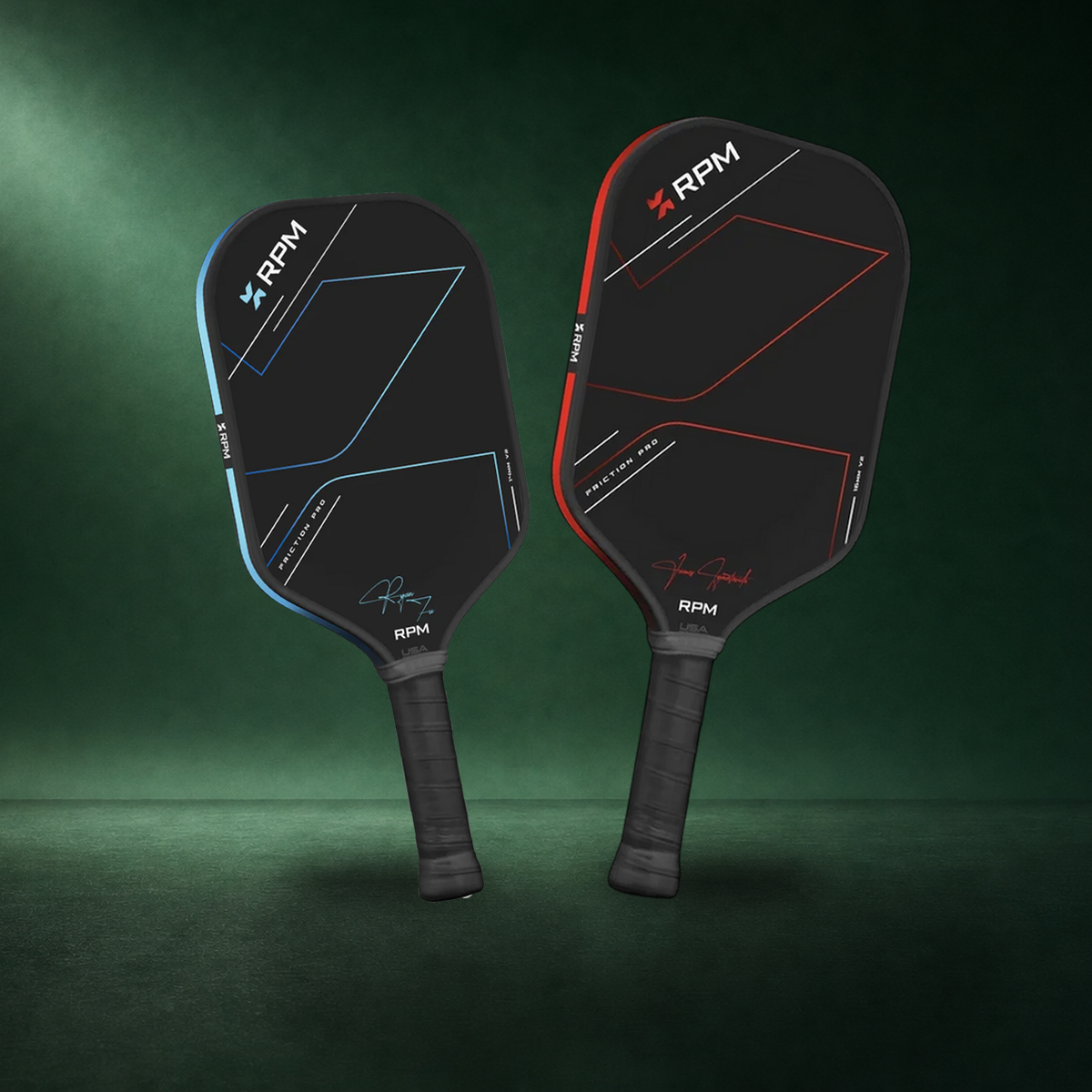
RPM FRICTION PRO V2: 14mm vs 16mm

If you've been anywhere near a competitive pickleball court in the last 12 months, you've heard about the RPM Friction Pro. The original turned heads. The V2 is the version that's quietly become the paddle to beat, co-developed with top-10 pro James Ignatowich and re-engineered around a new carbon layup that produces some of the most aggressive spin numbers we've seen on any paddle, anywhere.
The V2 comes in two thicknesses, 14mm and 16mm, and the choice between them isn't about price or aesthetics. It's about how you actually want the ball to come off the face. Here's the breakdown.
What's actually new in the V2
RPM didn't just slap a new sticker on it. The V2 is a genuine rebuild of the original Friction Pro with three big technology changes:
- Axial Carbon Layup: the face is built on a new directional carbon weave that aligns fibres along the dominant force vectors of a typical pickleball stroke. In practice: more energy transfer into the ball at contact, a noticeably crisper feel, and a meaningful upgrade for spin. The surface bites the ball harder than the V1 did.
- Enhanced EVA foam ring: a perimeter foam ring around the edge of the core. This expands the sweet spot dramatically (one of the largest on the market right now) and dampens the harsh off-centre vibrations you get with pure carbon paddles. Mishits feel like hits.
- Tri-Density Core: rather than a single uniform polymer core, the V2 uses three different densities engineered into specific zones. Firmer where you want pop, softer where you want feel. The result is a paddle that doesn't behave like a one-trick pony.
Layered together with RPM's existing CarbonBite surface, you get a face that grips the ball longer at contact than basically anything else in the price bracket, and that's where the spin comes from.
The shape: elongated, and what that means for you
Both versions of the V2 use RPM's elongated shape: 16.5″ long by 7.5″ wide. That's longer and narrower than a "standard" paddle (which is closer to 16″ × 8″).
The trade-off with elongated shapes is well known:
- You gain reach, leverage on drives and overheads, and a sweet spot that sits a bit higher up the face, which makes the paddle feel more like a tennis racquet in your hand.
- You give up a bit of forgiveness on hand battles at the kitchen line, where a wider paddle is easier to react with.
If you're a former tennis player, a singles player, or anyone who likes to step into the court and drive, the elongated shape will feel immediately right. If you live at the kitchen line and your game is built around hands and reflexes, you may prefer a more standard shape.
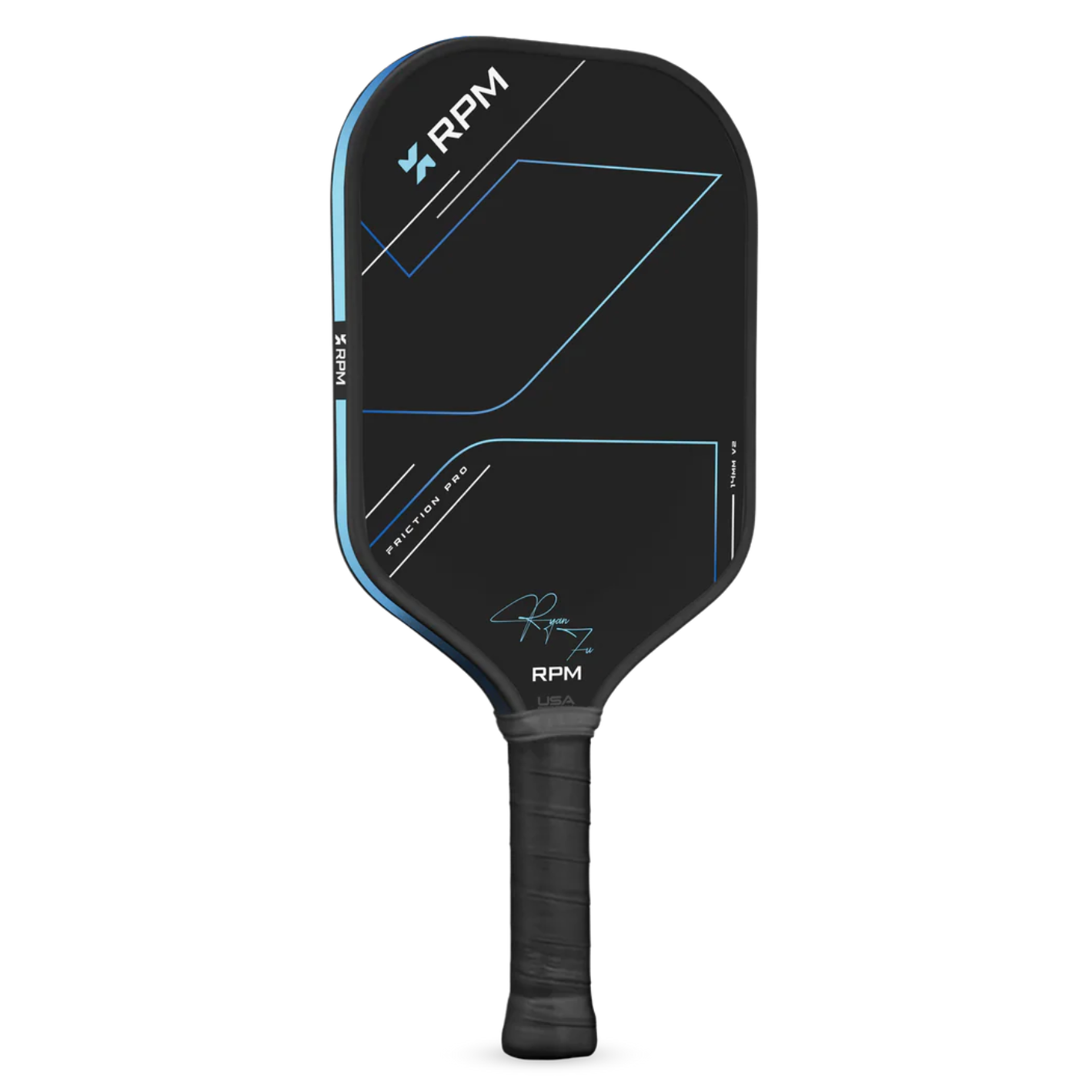
RPM Friction Pro V2: 14mm Elongated
The 14mm is Ryan Fu's competition paddle, and Ryan plays the game at warp speed. That tells you everything about what this paddle does.
A thinner core means a more lively face. Energy returns into the ball faster, the rebound is quicker, and you get more raw power for the same swing speed. The 14mm V2 sits at an average 7.8 oz (range 7.6 to 8.0 oz), which keeps swing weight manageable even with the elongated shape.
Who the 14mm is for
- Aggressive players who generate their own pace and want the paddle to amplify it.
- Fast-hands counter-punchers who attack from the transition zone.
- Singles specialists looking for reach plus pop on drives.
What you give up
A thinner core is a less forgiving core. You'll feel mishits more, and on long, soft dink rallies the 14mm requires more touch to keep balls in.
Shop the RPM Friction Pro V2 14mm.
Use code "RPM10" for a 10% discount at checkout and save big on all RPM Pickleball Paddles.
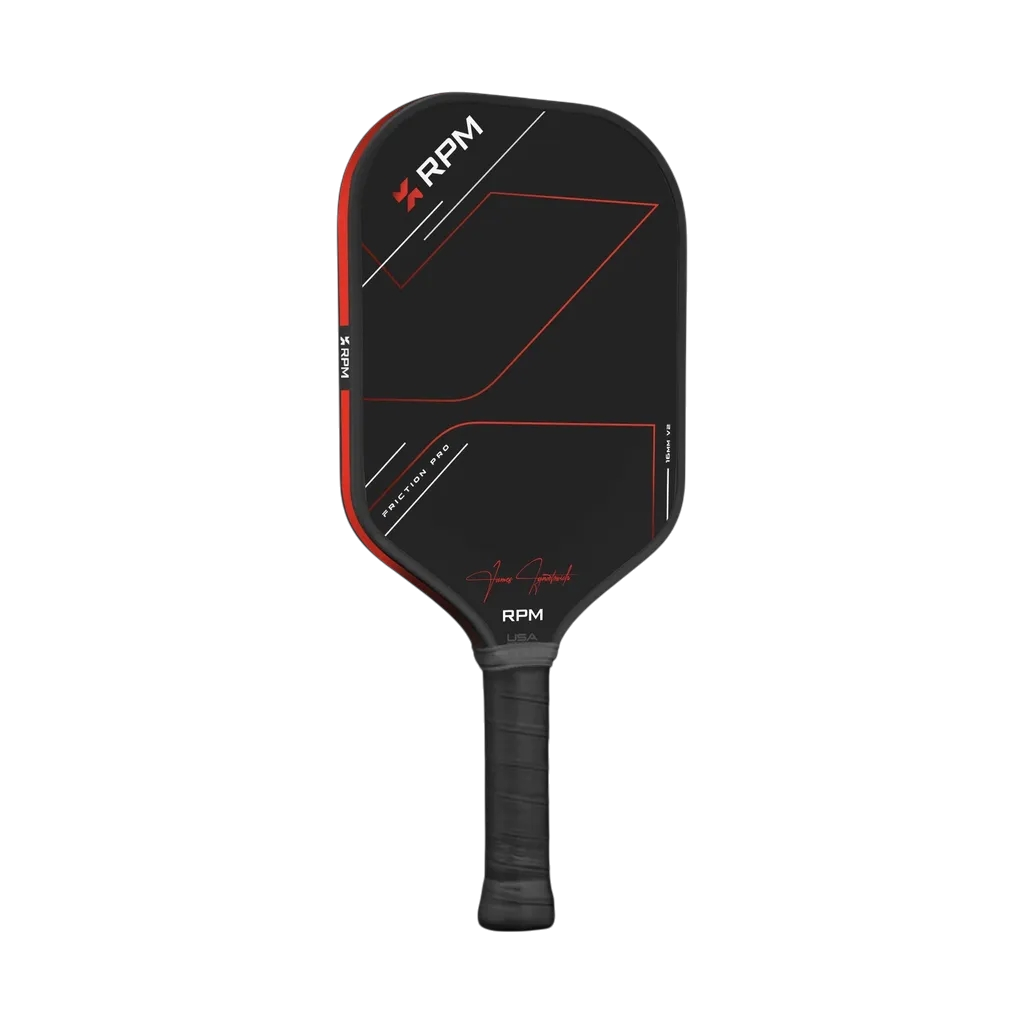
RPM Friction Pro V2: 16mm Elongated
The 16mm is the James Ignatowich signature, and it's the more measured of the two. The thicker core absorbs more energy at contact, which makes the paddle feel plusher in the hand and more controllable on drives. Power is still very much there, just more dialled, less explosive.
The 16mm V2 averages 7.9 oz (range 7.7 to 8.1 oz) with a swing weight of around 117 and a twist weight of 6.4. For the spec nerds, that's a stable, predictable platform that doesn't twist on off-centre contact.
Who the 16mm is for
- Control players who win points with placement and patience.
- Drop-shot specialists who construct points rather than blast them.
- Intermediate players moving up to a pro-level frame. The bigger sweet spot makes the learning curve easier.
What you give up
A slight reduction in raw pop compared to the 14mm. Counter-attacks won't fly off the face quite as quickly.
Shop the RPM Friction Pro V2 16mm.
14mm vs 16mm: at a glance
- Signature: 14mm = Ryan Fu | 16mm = James Ignatowich
- Average weight: 14mm = 7.8 oz | 16mm = 7.9 oz
- Feel: 14mm = crisp, fast rebound | 16mm = plush, controlled
- Power: 14mm = higher | 16mm = controllable
- Forgiveness: 14mm = less | 16mm = more
- Best for: 14mm = aggression, reach, pop | 16mm = construction, touch, soft game
- Shared specs: 16.5″ × 7.5″ elongated, 5.5″ grip, 4.125″ grip circumference
Which one should you buy?
If you're an aggressive, fast-hands player who wants the paddle to push the pace: the 14mm.
If you're a control-first player who wins points with placement, drops, and patience: the 16mm.
If you're somewhere in the middle and you're not sure, the 16mm is the safer first paddle: the bigger sweet spot is more forgiving while you dial in the V2's spin profile, and you can always pick up the 14mm later as a second weapon.
Either way, the V2 is a serious, tournament-grade paddle. It's the paddle James Ignatowich actually competes with, not a paddle named after him.
See the full lineup
Browse the full RPM Friction Pro V2 collection at Racquet World.
Free standard shipping Australia-wide on orders over $250. Click and collect available from our Epping, Victoria store.