
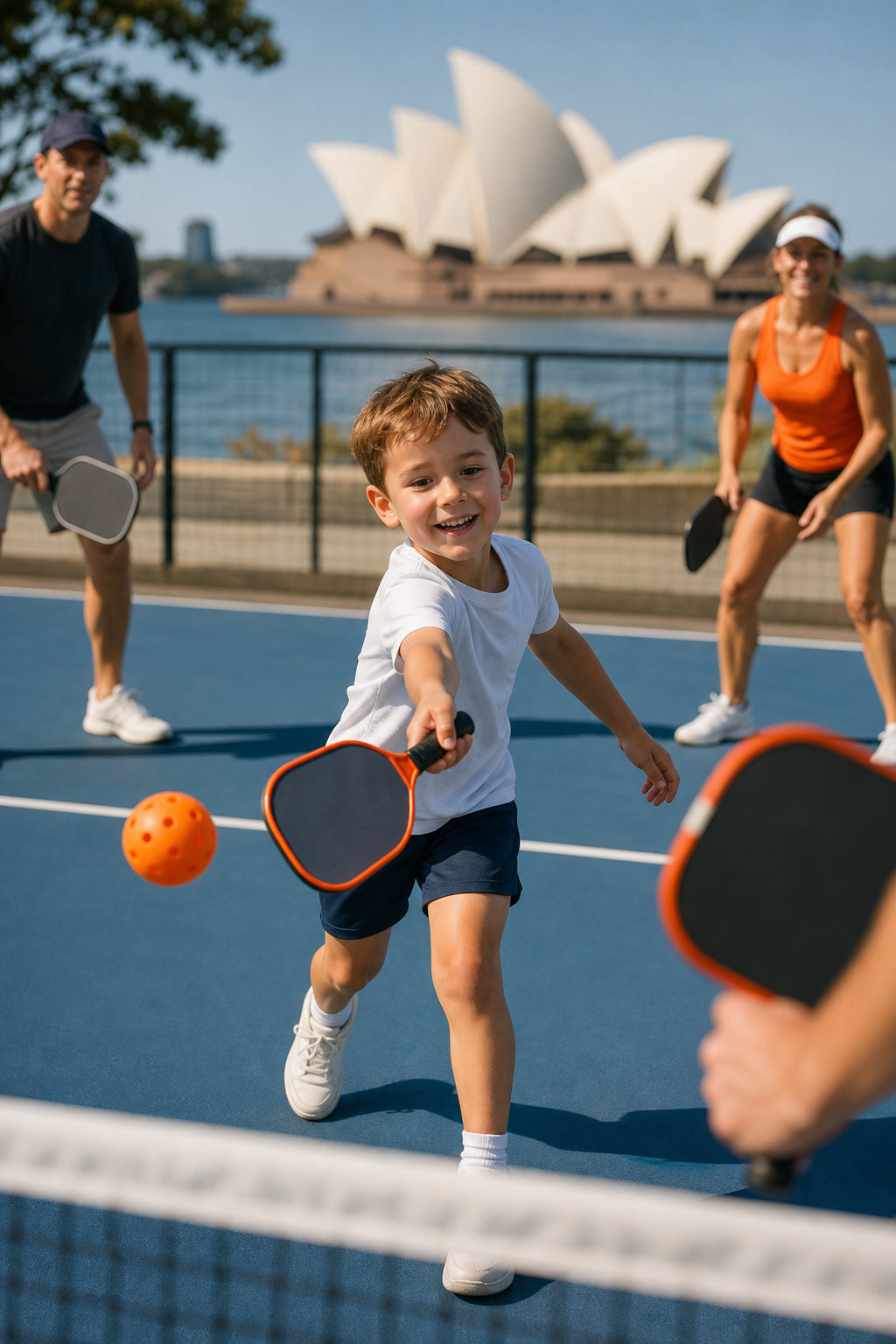
How to Choose a Pickleball Paddle for Kids (Australia)
So your kid wants to play pickleball. Great choice. It's fast, fun, and easy to pick up. But here's the thing: hand them an adult paddle and you're setting them up for frustration. Too heavy, too long, too much grip. Their swing suffers. Their wrist and elbow take the strain. And suddenly pickleball isn't fun anymore.
We've seen it happen. That's why we wrote this guide. We'll walk you through every step of choosing a pickleball paddle for kids, size, weight, grip, core, face, safety, and value. By the end, you'll know exactly what to look for. No jargon. No hype. Just clear, usable advice from people who live and breathe this sport.
Let's get started.
Step 1: Determine the Right Paddle Size and Weight
The first thing you need to get right is how big and heavy the paddle should be. A pickleball paddle for kids should be shorter and lighter than an adult model. Why? Because kids have smaller frames and less muscle mass. A heavy paddle forces them to compensate with their wrist and elbow, leading to tired arms and bad habits early on.
According to industry experts, a youth paddle should be around 15 to 16 inches (38 to 41 cm) long and weigh between 6 and 7.5 ounces (170 to 213 g) for younger children, depending on age and strength. For example, a kids pickleball paddle weighs just 6 oz (170 g) and is marketed for kids under 8. Another kids paddle, at 7.6 oz (215 g), is aimed at older kids or juniors. That weight difference matters – too light and they can't generate power; too heavy and they can't control it.
So how do you decide? Use this simple table as a starting point:
But don't go by age alone. Check your child's height and strength. A taller, stronger 9-year-old might be ready for a slightly heavier paddle. The key is to let them hold it and swing it. If they struggle to keep the paddle face stable or complain of arm fatigue after 10 minutes, it's too heavy or too long.
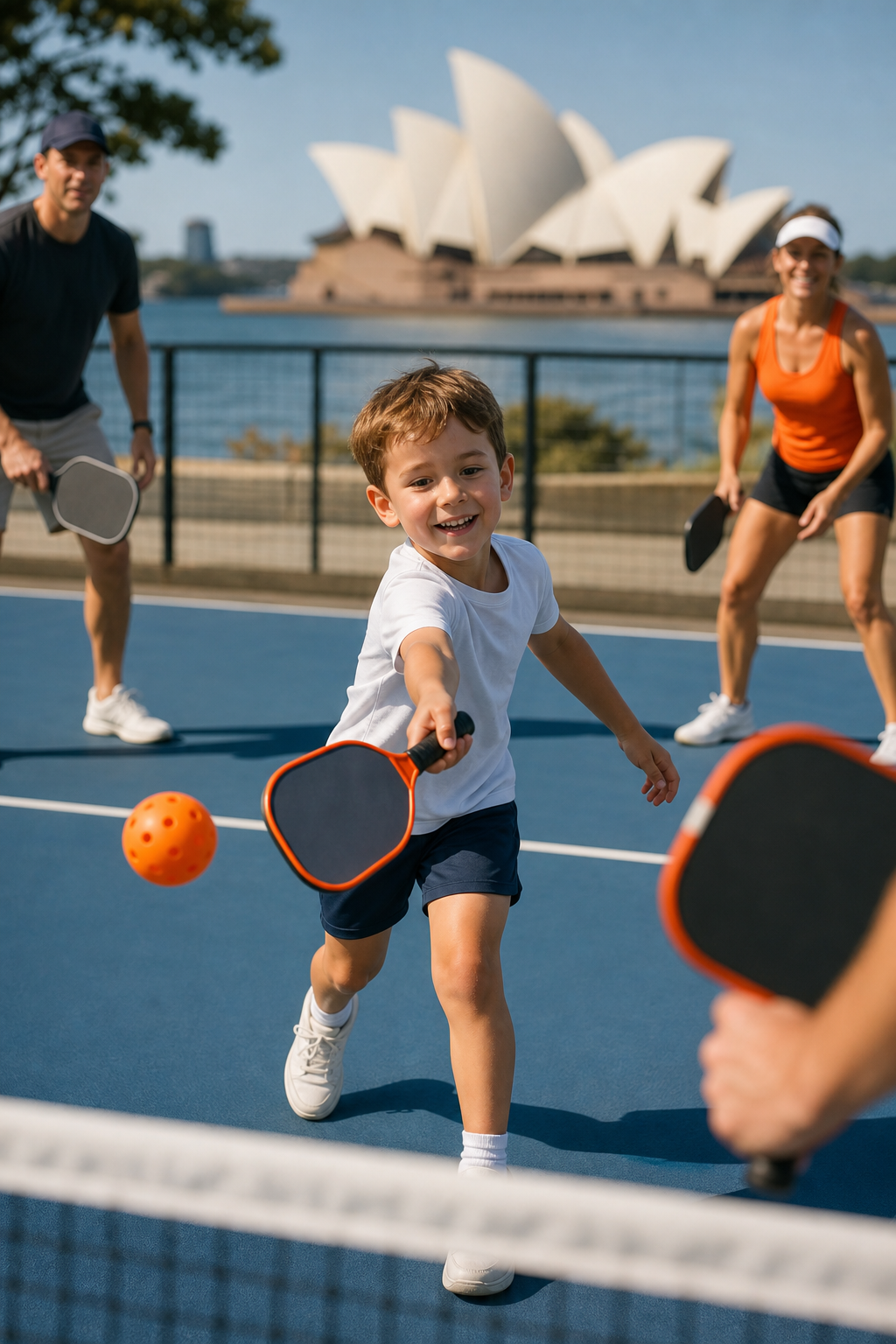
Another trick: Have your child extend their arm with the paddle. If the paddle tip touches the ground when their arm is relaxed at their side, it's too long. A good rule of thumb: the paddle shouldn't be longer than their forearm.
At Racquet World Australia, we stock a range of junior paddles from leading brands. Come in and let your child try a few. We're in Epping, Melbourne, and we'll help you find the right fit.
Step 2: Choose the Correct Grip Size and Handle Length
Grip size is probably the most overlooked spec when picking a pickleball paddle for kids. Yet it's one of the most important. A grip that's too thick forces a child to squeeze harder, restricting wrist action and causing fatigue. A grip that's too thin makes the paddle twist in their hand, leading to inconsistent shots.
The standard way to measure grip size is to have your child hold the paddle with their dominant hand. There should be a small gap , about the width of your pinky finger , between their fingertips and the base of their palm. If their fingers dig into their palm, the grip is too small. If they can't wrap their thumb around, it's too big.
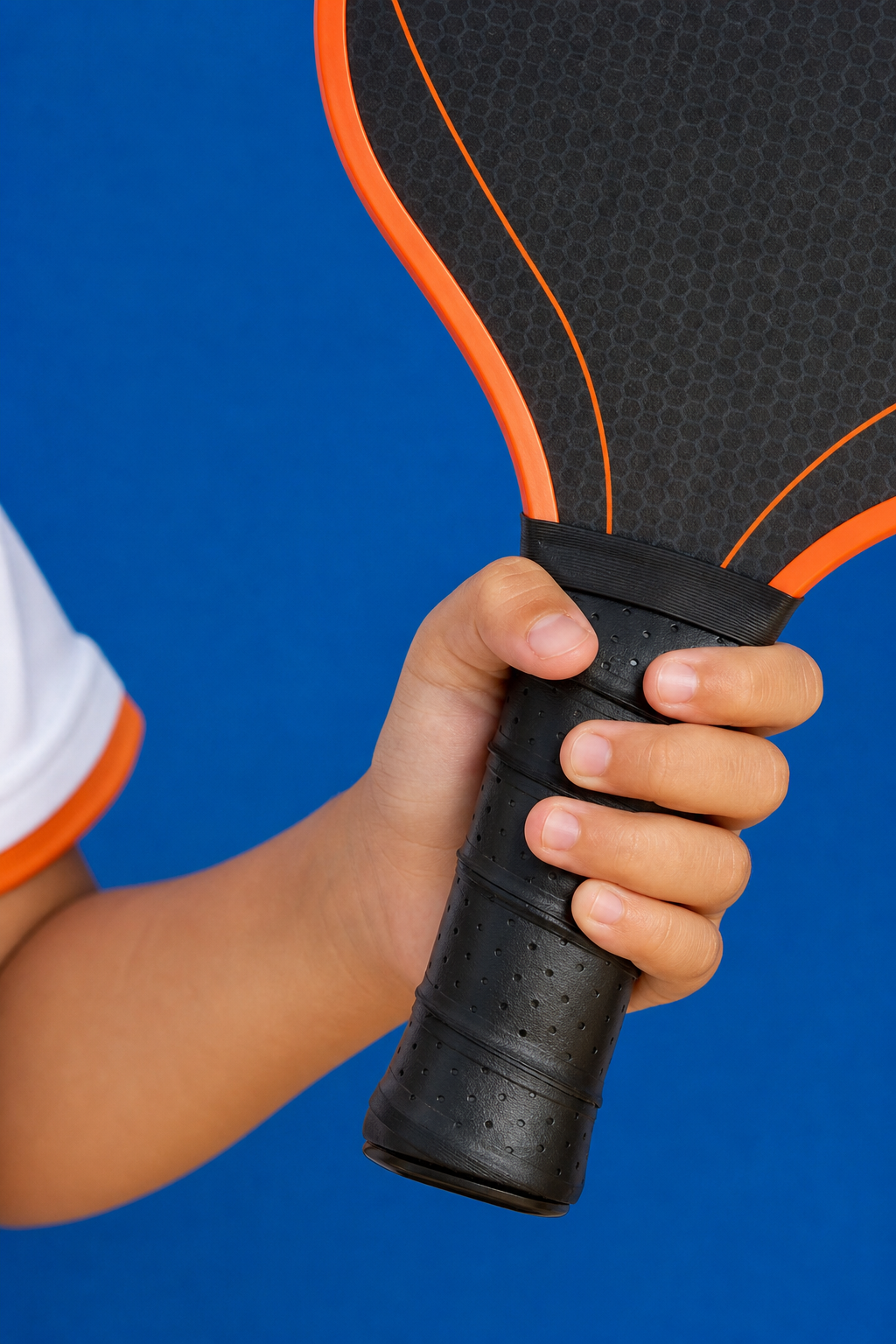
Most junior paddles come with a grip circumference between 4 and 4.25 inches (10 to 10.8 cm). That's smaller than the standard adult 4.25-4.5 inches. But here's the problem: not all manufacturers list grip size. In fact, a recent survey of kids' paddles showed that none of the popular models from various well-known brands (including many top-selling ones and even a Racquet World set) disclose grip circumference. That's a blind spot. You have to test it in person or contact the seller.
Handle length also matters. A longer handle (5.5 inches or more) allows for a two-handed backhand, which many younger players prefer. A shorter handle (under 5 inches) is better for quick net play. For kids just starting out, a medium handle of about 5 inches is a safe bet.
If the grip feels slightly too big, you can always add an overgrip to make it thicker. But you can't make it smaller. So err on the side of slightly too small and add an overgrip if needed.
"The best way to know if a grip fits is to hand your child the paddle and watch them swing naturally. If they adjust their hand position or try to 'choke up,' the grip is likely too big."
At our shop, we encourage kids to test different paddles. We even have a demo program for three days so you can see how it feels on a real court.
Step 3: Select the Core Material and Thickness
The core of a paddle affects its feel, power, and control. For kids, you want something that helps them develop good technique without being too unforgiving. The most common core material is polypropylene honeycomb, it's soft, flexible, and quiet. That's what you'll find in most youth paddles. It offers a good balance of control and power, and it's easy on the arm.
Polymer cores are the most popular because they're soft, flexible, and quiet. They also provide maximum control, which is exactly what beginners need. Many kids paddles use a polymer honeycomb core, as do other popular youth paddles. Nomex cores, on the other hand, are harder and louder; they offer more power but are less forgiving. Avoid Nomex for young children. Aluminum cores are lightweight and could work for kids, but they don't perform as well as polymer.
Core thickness also plays a role. Thicker cores (16 mm) offer more dwell time and a larger sweet spot, making the paddle more forgiving. Thinner cores (14 mm) provide more power but less control. For kids, we recommend 14 mm or 15 mm as a sweet spot , enough power to get the ball over the net, but enough control to keep it in play.
Here's a quick comparison:
When in doubt, choose a polymer core with a thickness around 14-16 mm. That's the safest bet for a growing player. At Racquet World, many of our junior-friendly paddles come with polymer cores and are available in different thicknesses. Come in and feel the difference.
Step 4: Evaluate Surface Material for Spin and Durability
The face of the paddle is what contacts the ball. It determines spin, durability, and feel. For a pickleball paddle for kids, you want something that offers decent spin without being too slick or too rough. The two most common face materials are fibreglass and carbon fibre.
Fibreglass is more affordable and forgiving. It has a bit of flex, which creates a larger sweet spot , great for kids who are still working on their aim. According to experts, fibreglass paddles are softer, more forgiving, and offer a large sweet spot. They're also cheaper (around $79 AUD). That makes them a great entry point.
Carbon fibre is stiffer and more expensive. It offers better spin and control, but the sweet spot is smaller. For older kids who are starting to play more seriously, carbon fibre can be a worthwhile upgrade. Some fibreglass paddles offer a large sweet spot, while certain carbon fibre paddles provide maximum spin.
There's also composite faces that blend materials. And for pure beginners, you might even see aluminum , but those are less durable and offer less spin. Avoid them if your child plans to play regularly.
Here's a simple rule: If your child is just starting out, go with fibreglass. It's cheaper, more forgiving, and will help them learn proper technique without the ball flying off too fast. If they've been playing for a while and want more spin and control, upgrade to carbon fibre.
We have both types at Racquet World Australia. Our fibreglass face paddles are perfect for beginners. For advanced juniors, our carbon fibre paddles use high-quality materials for elite spin. You can browse our collection online.
Watch the video above for a hands-on test of kids' paddles. It shows how face material affects shot performance in real games.
Step 5: Check USAPA Approval and Safety Features
If your child wants to play in tournaments or even just in official leagues, the paddle must be USAPA-approved. That means it meets the standards for size, weight, and surface roughness set by USA Pickleball. Even for casual play, a USAPA-approved paddle ensures a consistent experience and fair game.
According to USA Pickleball(the governing body), all paddles used in sanctioned events must have a current approval sticker. Check the paddle before buying , many manufacturers list it on the packaging or on their website. For example, some junior paddles (not in our stock but used as a reference) are USAPA approved. Most of the paddles we carry include USAPA approval.
Safety is also key for kids. Look for:
- Edge guard: A rubber or plastic rim that protects the paddle from cracks and also provides cushioning if your child accidentally hits the ground. Some paddles have had known issues where the edge guard would pop off; avoid those by choosing a paddle with a securely bonded edge guard.
- Handle design: Some paddles have a flared or grooved handle to prevent slips. A non-slip grip is especially important if your child's hands get sweaty.
- Light weight: A heavy paddle increases the risk of arm strain. Stick to under 8 oz (227 g) for most kids under 12.
- Break-resistance: Kids can be rough on equipment. A paddle with a thermoformed or uni-body construction (like popular high-end models) is more durable and less likely to break on impact.
One trick to test durability: Tap the paddle face on a hard surface (gently). A solid, non-hollow sound usually indicates better construction. A hollow or thin sound might mean less dense core materials that could crack sooner.
If you're shopping at Racquet World Australia, we stand behind every paddle we sell. All the paddles we stock are USAPA approved and built with quality materials. Come and see for yourself.
Step 6: Compare Value and Top Picks for Kids
Now that you know what to look for, let's compare some actual options. We've evaluated three popular kids' paddles based on research and our own expertise. Remember, we're here at Racquet World to help you choose the best one for your child.
A note on younger children: Racquet World does not currently stock a dedicated sub-7 oz paddle for under-10s. The paddles above are the lightest, most control-friendly options in our range and are well suited to older kids and juniors. If you are buying for a younger child, get in touch and we will help you find the best fit.
As you can see, there's a gap in transparency. Many paddles, including well-known brands, don't list weight, grip size, or core material. That's a problem. At Racquet World, we believe in full disclosure , ask us any spec, and we'll give you the details.
For the best pickleball paddle for kids we recommend:
- Best for beginners (under 8): A lightweight fibreglass paddle with polymer core, like a lightweight option. Light enough to swing easily, forgiving on off-center hits.
- Best for intermediate juniors (8-12): A paddle in the 7-7.5 oz range, like a 7-7.5 oz paddle from a leading brand. Look for 14-16 mm core for good control.
- Best for advanced juniors (12+): Consider an adult-shaped paddle but lighter, like a high-performance paddle with 14-16mm core, or a paddle weighing around 7.9-8.0 oz. These offer real performance without being too heavy.
If you're planning a kids' pickleball event or tournament at your local club, you might also need shelter and signage. Custom marquees and gazebos are perfect for family pickleball days, making the event feel more official and keeping everyone comfortable between games.
And of course, for professional advice and a great selection, come to Racquet World Australia. Our team is passionate about helping every player, big or small, find the right gear. Stop by our Pickleball Parlour in Epping, or shop online , we ship anywhere in Australia.
Frequently Asked Questions
What size pickleball paddle is best for a 7-year-old?
A 7-year-old typically does best with a paddle around 15 to 15.5 inches long and weighing between 6 and 7 ounces. Look for a grip circumference of about 4 inches. A kids paddle at 6 oz is a good starting point. Make sure it feels light in their hands and they can swing it without strain.
Can my child use an adult paddle?
We don't recommend it for children under 12. Adult paddles are longer and heavier, which forces kids to alter their swing mechanics, leading to bad habits and potential arm pain. If your child is taller and stronger, a lighter adult paddle (under 8 oz) might work, but it's better to start with a proper junior paddle.
How do I know if the grip is the right size?
Have your child hold the paddle with their dominant hand. There should be a small gap (about the width of your pinky finger) between their fingertips and the base of their palm. If their fingers dig into their palm, it's too small; if they can't wrap around fully, it's too big. Most junior paddles have a grip circumference of 4 to 4.25 inches.
Do I need USAPA approval for recreational play?
Not at all. USAPA approval is only required for sanctioned tournaments. For casual family play, any paddle will do. However, choosing a USAPA-approved paddle ensures it meets quality and performance standards, so it's a good sign of durability and consistency. Many of our paddles from top brands are USAPA approved.
What core material is best for a beginner child?
Polypropylene (polymer) honeycomb is the best choice. It's soft, quiet, and offers great control, which is exactly what beginners need. Avoid Nomex for kids, as it's harder and louder. Thicker cores (14-16 mm) are more forgiving and help with control. Most junior paddles use polymer cores.
At what age can my child switch to an adult paddle?
It varies. Many junior players can transition around age 12-14, depending on their height, strength, and skill level. A good sign is when they can comfortably handle a paddle that's 16 inches long and weighs 8 oz. If they're still struggling with control or fatigue, stick with a junior paddle a bit longer. Some brands offer intermediate paddles in the 7.5-8 oz range.
How do I maintain a kids' pickleball paddle?
Store it in a padded cover when not in use to protect the edge guard and face. Avoid leaving it in extreme heat or cold, which can warp the core. Clean the face with a damp cloth after play to remove dirt that can affect spin. Check the grip regularly and replace overgrips when they get worn.
Can I use a tennis racquet for pickleball?
Technically you can, but it's not ideal. Tennis racquets are much heavier and don't have the same sweet spot or surface properties. They'll be harder for kids to control and can cause arm fatigue. Pickleball paddles are specifically designed for the smaller court and lighter ball. We strongly recommend using a proper pickleball paddle.
Conclusion
Choosing the right pickleball paddle for kids doesn't have to be complicated. Start with size and weight , get something that fits their body. Then check the grip , it's often overlooked but important. Pick a polymer core for forgiveness and a fibreglass face for beginners, upgrading to carbon fibre when they're ready. Make sure it's USAPA approved if they plan to compete, and don't forget safety features like a good edge guard.
We at Racquet World Australia are here to guide you. Our team has the knowledge and the range to help you find the perfect paddle for your young player. Visit our Pickleball Parlour in Epping, Melbourne, or browse our online store. We'll make sure your child gets the best start in this amazing sport.
Got questions? Reach out to us or better still, come in for a demo. Let's get your kid playing pickleball the right way.